
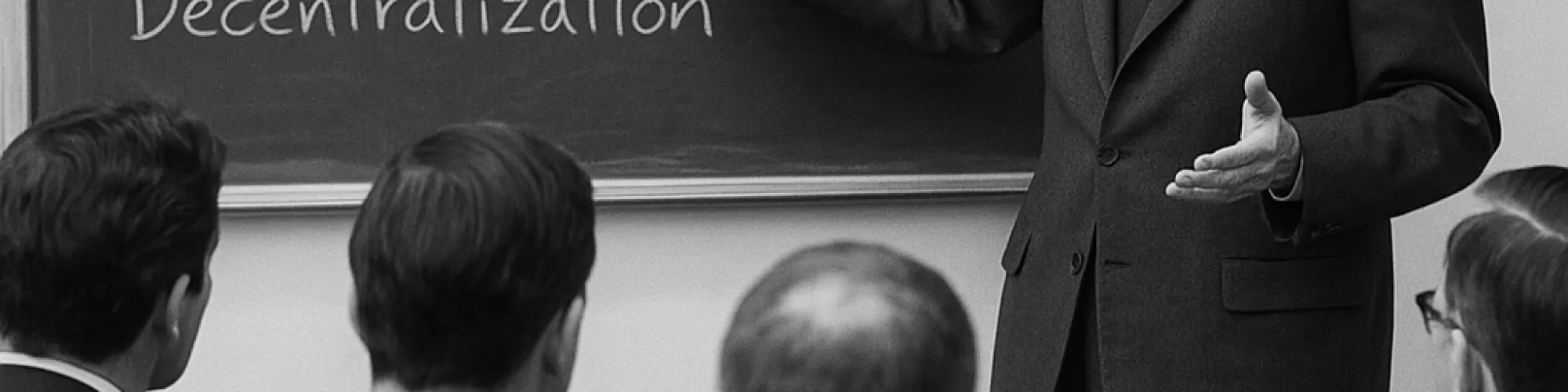
Peter Drucker's insights remain remarkably applicable even in today’s fast-evolving world, dominated by AI, remote work, and relentless digital advancements. His ideas have stood the test of time because they focus on fundamental aspects of human behavior, organizational goals, clear purpose, and disciplined management—elements that are perpetually relevant and subject to new interpretations rather than quick obsolescence.
Note: this isn't really Drupal related - but it's still business related - and Drupal is business.
Peter Drucker
Peter Drucker was one of the most influential thinkers in the history of modern management. Born in Austria in 1909 and later becoming an American citizen, he spent more than six decades studying organizations, economics, leadership, and the behavior of people at work. He taught at Claremont Graduate University, advised CEOs and world leaders, and wrote more than thirty books that shaped the foundations of management as we know it. His work blended history, sociology, psychology, and business insight, and he had a unique ability to explain complex organizational problems with elegant clarity.
Drucker’s greatest contribution was reframing management as a discipline rooted in purpose, people, and effectiveness rather than bureaucracy or control. He introduced ideas that are now standard practice: management by objectives, the rise of the knowledge worker, decentralization, continuous learning, and the central role of the customer. His writings helped businesses, nonprofits, and governments think more strategically and act with greater focus. Even today, leaders still return to Drucker because his insights address human nature and organizational clarity, both of which remain constant in a world that keeps accelerating.
Here are some of Drucker's enduring teachings that continue to resonate:
1. Management by Objectives
Drucker advocated that individuals achieve their best performance when their goals are clearly defined, measurable, and significant.
Nowadays, concepts like OKRs, KPIs, agile planning, and quarterly scorecards have evolved from these principles. Giants like Google and Intel have structured their approaches around Drucker's ideas.
2. Focus on Core Strengths
He encouraged organizations to concentrate on their unique capabilities rather than overextending themselves.
In the current climate of intense competition and AI-driven change, being clear about core competencies remains one of the most sustainable advantages a company can have.
3. The Primacy of the Customer
Drucker famously asserted that the primary purpose of a business is to create a customer.
Today, user experience, customer-focused design, NPS scores, and customer lifecycle strategies are grounded in this philosophy. Even digital products thrive or fail based on it.
4. Knowledge Workers
He foresaw the emergence of knowledge workers as early as the 1950s.
Today, the AI-driven era is built on this prediction. Everything from remote work protocols to hybrid team arrangements relies on frameworks that leverage how people think and generate value.
5. Decentralized Decision Making
He emphasized that decisions should be made close to the action, not confined to a top-down hierarchy.
Today, agile teams, cross-functional units, DevOps initiatives, and empowered employees embody this approach. Successful organizations flatten the decision-making process.
6. Innovation as a Discipline
Drucker considered innovation as a structured, repeatable process rather than a mysterious art.
Today, methodologies like Lean Startup, design thinking, and product discovery extend from this philosophy. AI-driven product development also depends on a cycle of test, measure, and iterate.
7. Planned Abandonment
He advised leaders to regularly discontinue practices that have outlived their usefulness.
In today’s context, this is vital for digital transformation. Outdated systems, obsolete programs, irrelevant content, old policies, and cumbersome processes can impede growth unless they are strategically phased out.
8. Doing the Right Things vs. Doing Things Right
He made a crucial distinction between being efficient (executing tasks effectively) and being effective (selecting the right tasks to do).
Today, businesses awash with data, tools, and automation often err by conflating activity with progress. Drucker's insight helps cut through this misperception.
9. Social Responsibility and Mission
He maintained that organizations bear responsibility not just for profit but also for their societal impact and moral integrity.
Nowadays, ESG (Environmental, Social, Governance) initiatives, mission-driven organizations, and purpose-based branding reflect this philosophy. Today’s workforce also expects leaders to prioritize ethical practices.
10. Continuous Learning
Drucker emphasized the importance for professionals to actively pursue learning throughout their careers.
Today, with AI constantly reshaping skill requirements, organizations that don’t foster a culture of continuous learning quickly fall behind.
Conclusion
Drucker's timeless principles continue to provide invaluable guidance in today's complex and rapidly changing business landscape. His emphasis on clarity of purpose, effective management, and human-centric approaches remains as relevant as ever. Whether it concerns customer focus, innovation, or the empowerment of knowledge workers, Drucker's lessons persist as foundational elements that help organizations navigate the challenges and opportunities of the modern world.
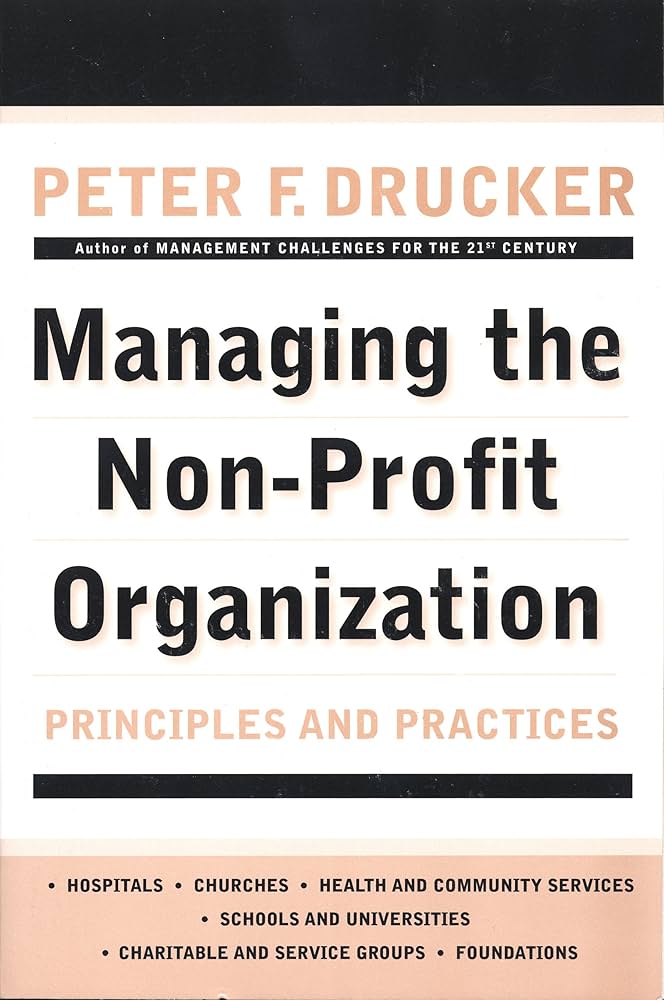
As an aside, one of my favorite Drucker books is "Managing the Non-Profit Organization" (not an affiliate link). It is deeply insightful and incredibly helpful.
Peter Drucker's insights continue to shape modern management amidst AI advancements and remote work. Known as a management pioneer, Drucker emphasized purpose, people, and effectiveness over bureaucracy. His timeless principles, such as management by objectives, focusing on core strengths, and prioritizing the customer, resonate today. His foresight on knowledge workers and decentralized decision-making is evident in today's agile and cross-functional teams. By promoting innovation, continuous learning, and social responsibility, Drucker’s teachings offer enduring guidance for navigating our fast-paced digital world. Leaders still turn to Drucker for clarity in a constantly accelerating environment.
Latest Tips
Peter Drucker's insights continue to shape modern management amidst AI advancements and remote work. Known as a management pioneer, Drucker emphasized purpose, people, and effectiveness over bureaucracy. His timeless principles, such as management by objectives, focusing on core strengths, and prioritizing the customer, resonate today. His foresight on knowledge workers and decentralized decision-making is evident in today's agile and cross-functional teams. By promoting innovation, continuous learning, and social responsibility, Drucker’s teachings offer enduring guidance for navigating our fast-paced digital world. Leaders still turn to Drucker for clarity in a constantly accelerating environment.